AMAZE!
- 4.6
- Rating
- 100.00M
- Installs
- Free
- Price

 Analysis by App-foxy
Some puzzle games ask you to plan several moves ahead, while others are mainly about reacting quickly. AMAZE! sits in a more relaxed middle ground: I guide a ball through maze-like paths, work out how to cover the available route, and try to finish each challenge without making a careless move. It is easy to understand within moments, but the better puzzles still make me pause before touching the screen.
That combination makes it a useful little game for short breaks. I can open it while waiting for an appointment, play a few rounds, and stop without feeling that I have abandoned a long campaign. At the same time, it has enough problem-solving involved to feel more satisfying than simply tapping through a stream of distractions.
How the puzzle experience works in everyday play
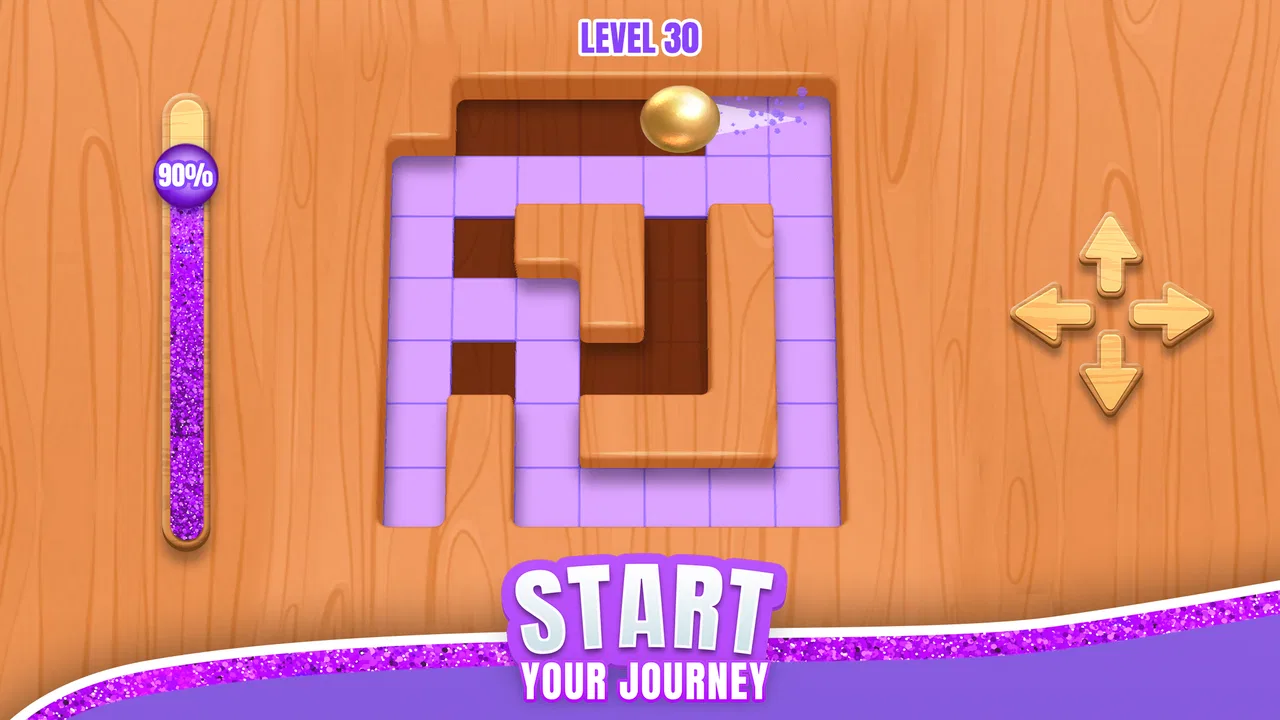
The central idea is straightforward: move the ball through a maze and solve the path in the right way. The challenge comes from reading the layout before committing to a direction. A route that looks obvious at first can leave an awkward section untouched, so I found myself slowing down and considering the whole board rather than following the first promising turn.
You May Also Like

 Blood Strike: 2.5 Anniversary
Blood Strike’s Loadouts Turn Every Drop Into a Tactical Gamble
A close look at Blood Strike’s custom loadouts: how fast access to signature weapons reshapes its battle royale rhythm, rewards preparation, and narrows the gap between fights.

 Pandora - Music & Podcasts
Pandora’s Music Is Easy to Start, but Harder to Recover
Pandora’s strength is its low-effort path from a seed to a station. Its weak spot is how much confidence it asks you to place in connection, setup, and quiet recovery.

 8 Ball Pool
 Is Built on Rivalries, Rematches, and Routine
A close look at the rivalries, rematches, shared routines, and unanswered safety questions that turn a quick pool match into a persistent mobile community.

 Samsung Music
’s Quiet Strength Is Playing What You Already Own
Its reach comes less from spectacle than from dependable access to a personal library. That simplicity is both the app’s strongest retention engine and its ceiling.

 AccuWeather: Weather Radar
AccuWeather Review: A Quick, Clear Forecast for Everyday Decisions
For everyday plans, the best forecast is the one you can understand quickly. AccuWeather makes rain timing, radar, and local conditions easy to act on, with a few trade-offs.

 Hill Climb Racing
Why Hill Climb Racing Still Turns Crashes Into One More Run
A tiny car, a bumpy hill and one more upgrade: Hill Climb Racing keeps resurfacing because its simple chaos makes every near-miss feel personal.
More From Our News Desk
View All News


That simplicity is one of the game’s strongest qualities. I do not need a tutorial-heavy introduction or a complicated set of rules. The visual goal is clear, and the interaction is familiar enough that a new player can begin immediately. The difficulty is not hidden behind a dense interface; it is contained in the arrangement of each puzzle.
In practice, the game works best when I treat every level as a small planning exercise. Instead of dragging the ball randomly, I look for dead ends, corners, and sections that could become inaccessible after an early move. This is also one of the more useful habits to develop: scan the entire maze before making the first move. It reduces unnecessary restarts and turns the game from trial and error into a more deliberate puzzle session.
The format suits touchscreens particularly well. A phone is always close by, and the game does not demand the kind of sustained attention that a lengthy strategy title requires. I can play with one hand during a quiet moment, although I prefer using both hands when I am concentrating because it feels easier to keep the device steady and inspect the board carefully.
Why the short-session format works
I would describe AMAZE! as a game for brief bursts rather than a title I would reserve an entire evening for. Its appeal comes from solving one challenge, enjoying the small sense of completion, and deciding whether to continue. That makes it a good companion for commuting, waiting rooms, or a few minutes before bed, provided the player is comfortable with a simple puzzle loop.
A realistic use case is a lunch break when I have ten minutes and do not want to start a story-driven game. I can complete a handful of puzzles, stop at a natural point, and return later without needing to remember a plot, a character build, or a complicated objective. The low mental setup is valuable, especially when I want something interactive but not exhausting.
There is also a quiet benefit for people who enjoy visual planning. The puzzles encourage me to notice patterns and think about consequences, but they do not present themselves as formal brain-training exercises. I would not use it as a substitute for a dedicated logic course or a deeper puzzle collection. Its strength is that it makes this kind of thinking approachable and immediately playable.
What the free download means for value
The game is free to download, so the initial decision is simple: anyone curious about the maze format can try it without paying an upfront purchase price. That is important here because the core question is whether the basic puzzle rhythm feels enjoyable to you. A free starting point lets you answer that through actual play instead of relying on screenshots or a description.
There are in-app purchases priced from $0.99 to $14.99 per item. I see that as a reason to separate free access from paid value. The free entry makes the game easy to sample, but a player should decide personally whether any optional purchase improves the experience enough to justify spending. I would not assume that paying automatically makes the puzzles more interesting; the main value still comes from whether you enjoy solving the mazes.
For me, the sensible approach is to play without spending first. If the short challenges become a regular part of your routine and an available purchase removes a specific annoyance or adds something you genuinely want, then the cost can be considered on its own terms. If you only expect occasional use, the free version may already provide the value you are looking for.
This distinction also helps families make a clearer choice. The content rating is Everyone, which makes the game broadly approachable from an age perspective. However, an age rating does not answer every household question about purchases. If a child uses the device, I would still make sure the device’s purchase controls are set appropriately rather than relying on the rating alone.
Where the game delivers more than its description suggests
The most useful quality is not simply that the puzzles are easy to start. It is the way the maze layout rewards a change in thinking. When I get stuck, pushing the ball faster rarely helps. The better response is to stop, identify the remaining uncovered route, and work backward from it. That small shift turns a frustrating attempt into a manageable planning problem.
Another practical insight is to use failed attempts as information rather than treating them as wasted time. A move that blocks a corner tells me which part of the board needs to be handled earlier. This makes restarting purposeful. I am not just repeating the same sequence; I am testing a new order based on what the previous route revealed.
The game is also well suited to players who dislike complicated puzzle interfaces. There is no need to learn a large collection of symbols or memorize a long rule set before the challenge becomes meaningful. The board itself communicates most of what I need to know. That directness is a real advantage over some traditional puzzle alternatives that offer greater depth but demand more patience before they become comfortable.
At the same time, the straightforward design means the experience may not satisfy someone looking for elaborate logic systems, narrative progression, or a wide variety of puzzle mechanics. The pleasure is in navigating the maze and finding a successful route. If you need a puzzle game to constantly introduce new rules, this may feel narrower than expected.
How it compares with familiar puzzle alternatives
Compared with a crossword or word puzzle, AMAZE! is more visual and less dependent on language. That makes it a better choice when I want to solve something without searching for vocabulary or interpreting clues. A crossword offers richer subject matter and a longer-form challenge, while this game provides a quicker route from opening the app to understanding the task.
Compared with match-three games, the experience is less about creating combinations and more about planning movement. Match-three titles often reward rapid pattern recognition and repeated rounds with a strong arcade rhythm. Here, I get more satisfaction from choosing the correct path than from reacting to a changing board. Players who prefer constant action may find the maze format too quiet.
Compared with classic grid-based logic games, this title is easier to enter but may feel less deep for experienced puzzle fans. The advantage is convenience: I can understand the objective immediately and play in small pieces. The trade-off is that people seeking complex deduction, layered rules, or a large strategic space may prefer a more demanding alternative.
That comparison helped me place the game correctly. It is not trying to replace every kind of puzzle. It works best as an accessible touch-based maze game that offers a little thought without asking the player to commit to a long session or a difficult learning curve.
Small habits that improve the experience
I recommend checking the edges of the maze first. Outer corners are easy to overlook, and they often determine whether a route can be completed cleanly. I also try to identify narrow passages before moving through open areas. Handling a constrained section too late can force a restart, while planning around it early gives the rest of the board more flexibility.
Another useful habit is to pause after each major turn instead of steering continuously. That gives me a chance to confirm what remains and prevents an accidental move from carrying the ball farther than intended. It is especially helpful when playing on a small phone screen, where a quick gesture can be less precise than expected.
If I am repeatedly failing a puzzle, I change the starting assumption rather than making tiny adjustments to the same route. For example, I may begin by planning toward the least accessible area instead of the closest visible section. This approach is more efficient because it tests a different solution structure instead of repeating a familiar mistake.
These are modest techniques, but they make the game feel more rewarding. They also clarify its limits: the satisfaction comes from improving my approach, not from collecting a large set of tools or customizing a complicated strategy system.
Performance expectations and practical fit
The game supports devices running Android 7.0 or later, which gives it a practical place on many older Android phones as well as newer models. The current version is 5.9.1.0. For someone deciding whether to install it, the important point is to check that the phone meets that operating-system requirement before expecting the download to work.
CrazyLabs LTD is the developer behind the game. It has reached over 50 million installs, with an average rating of 4.6 from around 313 thousand ratings and roughly 39 thousand written reviews. Those figures suggest that the accessible maze concept has found a large audience, although popularity should not be confused with a guarantee that every player will enjoy the same pace or level of challenge.
The game was released on March 18, 2019, so it is not a brand-new puzzle experiment. I see that as useful context rather than a weakness: the concept has had time to become familiar to players, but anyone seeking the novelty of a recently invented mechanic may find the format conventional.
Who will get the most from it
I would recommend it to casual puzzle players who want clear rules, short sessions, and a visual challenge that can be understood quickly. It is particularly suitable for someone who enjoys solving routes, notices small layout details, and prefers a calm pace over rapid tapping. It can also work well for families because the Everyone rating keeps the intended content broadly accessible.
It is less suitable for players who want a deep campaign, a strong story, competitive multiplayer, or a puzzle system that changes dramatically from one type of challenge to another. I would also steer away from it if your main goal is a long, uninterrupted gaming session. The compact nature that makes it convenient can also make it feel repetitive when played for too long at once.
Players who are sensitive to optional spending should approach the purchase system thoughtfully. Since the download is free but individual in-app purchases range from $0.99 to $14.99, I would begin with the unpaid experience and decide later whether paying adds enough personal value. That is a more reliable test than assuming the highest-priced option is necessary for enjoyment.
My final recommendation
AMAZE! succeeds because it keeps its central idea understandable while leaving room for careful decisions. I enjoy it most when I have a few spare minutes and want a puzzle that asks me to look ahead without overwhelming me. The best moments come from spotting the route I missed, restarting with a better plan, and finishing a maze that initially seemed awkward.
Its limitations are equally clear. The formula is focused, so players looking for story, variety, or advanced logic may outgrow it. The free download is a strong reason to try it, but paid value should be judged personally rather than assumed. I would install it for casual maze solving, test the free experience first, and only consider an in-app purchase if the game becomes a regular part of my routine.
My verdict: try it if you want an accessible, free-to-start puzzle for short thinking breaks; skip it if you need deep systems or constant novelty. For the right player, it is a friendly and convenient game that makes a simple route-planning idea surprisingly satisfying.
FAQs for AMAZE!
01What is AMAZE! and how does it work?
AMAZE! is a vibrant puzzle game where players guide a ball through mazes to paint every tile. As you swipe in different directions, the ball fills in the paths with color. The challenge increases with each level as mazes become more intricate, requiring strategic thinking to complete.
02Is AMAZE! suitable for all age groups?
Yes, AMAZE! is designed to be accessible for players of all ages. Its intuitive controls make it easy for younger players to enjoy, while the increasing complexity of levels offers a stimulating challenge for older gamers. It's a great way to enhance problem-solving skills in a fun and engaging manner.
03Does AMAZE! require an internet connection to play?
AMAZE! can be played offline, making it an excellent choice for entertainment without an internet connection. While some features, such as updates or certain in-app purchases, may require connectivity, the main gameplay is fully accessible offline.
04Are there in-app purchases in AMAZE!?
Yes, AMAZE! offers in-app purchases that can enhance the gaming experience. These may include options to remove ads or unlock additional features. However, the core game is free to play, and purchases are entirely optional, allowing players to enjoy the game without spending money.
05What are the main features that make AMAZE! stand out?
AMAZE! stands out with its simple yet addictive gameplay, vibrant graphics, and progressively challenging levels. The game encourages strategic thinking and offers a satisfying experience as players complete each maze. Its offline capability and optional in-app purchases add to its appeal, making it a favorite among puzzle enthusiasts.
Pros
- Engaging and vibrant puzzle design.
- Simple controls for ease of play.
- Variety of levels keeps it fresh.
- No intrusive ads disrupt gameplay.
- Minimalistic yet appealing graphics.
Cons
- Can become repetitive over time.
- Limited hints may frustrate some users.
- Lacks multiplayer or social features.
- Some levels may seem too easy.
- In-app purchases can add up.

AMAZE!
Gallery